Find out how many CCTV cameras you need with our expert guidance. Ensure your property is fully protected with the right CCTV coverage for peace of mind.
How Many CCTV Cameras Does Your Property Need?
There is no single number of CCTV cameras that will suit every property. A small flat may only need one or two cameras, while a detached home with several entrances, a driveway and a large garden may need four, five or more. The right number depends on the entrances you need to watch, the size of the property and whether any areas are hidden from view.
Home security remains an important consideration. The Office for National Statistics reported 223,456 police-recorded burglaries in England and Wales in the year ending March 2026. This included residential and non-residential burglary and was 9% lower than the previous year. Choosing the right CCTV coverage can form one useful part of a wider approach to protecting a property.
Which Areas of Your Property Need CCTV Coverage?
Rather than choosing a number of cameras first, start by listing the parts of your property where somebody could enter or approach. The front door, back door, driveway, side gate, garage and garden entrance are common areas to consider.
You may not need a separate camera for every location. One correctly positioned camera can sometimes cover a door, path and part of a driveway at the same time. The aim should be to cover important areas clearly without installing cameras that record the same view unnecessarily.
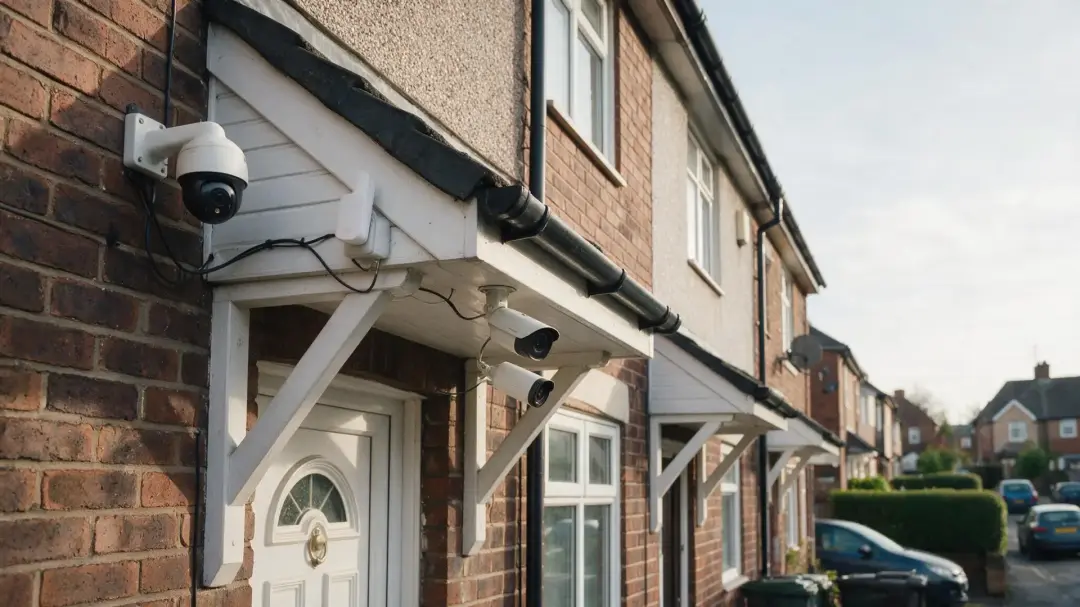
Walk around the outside of your property and look at it as somebody approaching the home would. Check where people can enter, which routes are hidden from windows and whether walls, fences, vehicles or plants create blind spots.
A useful CCTV camera should capture enough detail to help identify what happened. A very wide view may show the whole garden but provide too little detail to recognise a person near the boundary.
Check the view during both the day and night. A position that works well in daylight may become less useful after dark because of shadows, bright lights or reflections.
How Many CCTV Cameras Are Usually Enough for a Home?
For many smaller homes, two or three well-positioned CCTV cameras can cover the main points of entry. One might watch the front entrance and driveway while another covers the rear of the property. A third may be useful for a side entrance, garage or other area that cannot be seen by the first two cameras.
A larger detached property may need four to six cameras because there are usually more sides, entrances and outdoor areas to cover. Large homes, properties with several buildings or premises with long boundaries may need more. These figures are practical starting points rather than fixed rules, because the layout matters more than the size of the building alone.
Read related articles:
How CCTV Can Help Protect Your Home
What to Consider Before Installing CCTV Cameras
How Many Cameras Could Different Types of Property Need?
A flat or apartment may only need one camera covering its main private entrance, although communal areas can raise additional privacy questions. A terraced house may often be covered with two or three cameras, particularly when access is mainly from the front and rear.
A semi-detached home may need three or four cameras if there is also open access down one side. A detached property may need four to six cameras to cover the front, rear, both sides, driveway and other important areas. Properties with separate garages, workshops, gates or outbuildings may need extra cameras.
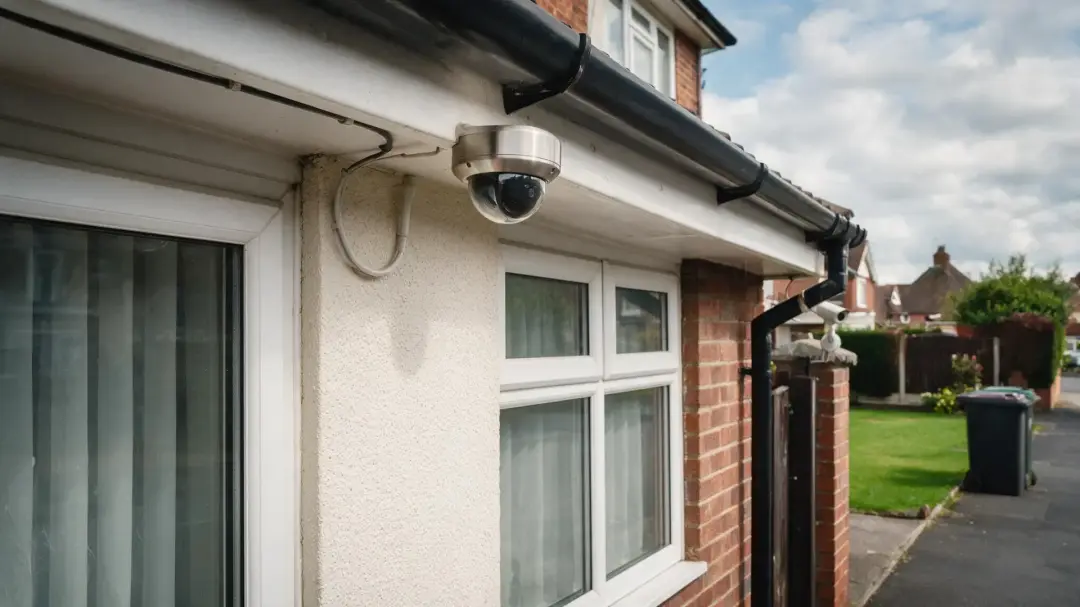
The number of cameras can also depend on the shape of the building. An L-shaped home, for example, may create areas that cannot be covered from a camera positioned at the front or rear.
Fences, extensions and outbuildings can create similar problems. A camera should not be added simply to increase the total number. Each one should have a clear area or purpose.
Before installation, make a simple plan showing each entrance and the proposed view of each camera. This can quickly show where coverage overlaps and where gaps remain.
Should Every Door and Entrance Have a CCTV Camera?
The main doors are usually sensible places to consider first because they are natural routes into the property. However, fitting one camera directly above every door is not always necessary. A camera placed further away may be able to cover both the door and the path leading towards it.
Give more attention to entrances that are hidden from neighbours or the road. Rear doors, side gates and entrances behind fences can sometimes be less visible than a main front door. Garages and outbuildings may also need coverage if they contain valuable property or provide another route towards the home.
Do You Need CCTV Cameras Around the Whole Property?
Complete coverage around every part of a property is not always necessary. The better approach is usually to identify likely routes of approach and make sure important areas are visible. Trying to record every metre of a boundary can greatly increase the number of cameras, storage needs and cost without providing much extra protection.
Recent crime figures also show why outdoor areas can deserve attention. The Office for National Statistics estimated around 791,000 incidents of other household theft in England and Wales in the year ending March 2026. This was a 21% increase from the previous year, with the rise linked to more theft from outside dwellings. Driveways, gardens, sheds and other outdoor areas may therefore be worth considering when planning coverage.
Can One CCTV Camera Cover More Than One Area?
A carefully placed camera may cover several areas at once, which can reduce the total number needed. For example, a camera on the corner of a house may be able to show a driveway, front path and entrance within the same view.
However, a wider view is not always a better view. If people appear very small in the recording, important details may be lost. It can sometimes be better to use two cameras with more focused views than one camera trying to cover a very large space.
How Do Blind Spots Affect the Number of CCTV Cameras?
Blind spots are one of the main reasons a property may need another camera. Corners, walls, extensions, trees, parked vehicles and changes in ground level can all prevent one camera from seeing an important area.
Check the proposed view from each camera before deciding that the system is complete. Pay particular attention to paths between the front and rear of the property, areas beside garages and places where somebody could approach without passing through another camera's view.
Does Camera Position Matter More Than Camera Quantity?
In many cases, position is more important than simply having a large number of cameras. Four badly positioned cameras could leave more useful areas unprotected than two cameras that have been carefully planned.
Important entrances should be recorded from a position that gives a useful view of anybody approaching. Cameras mounted extremely high may provide a wide overview but make faces more difficult to see. Cameras should also be protected from easy interference without being placed so high that the recording loses useful detail.
Will Your CCTV Cameras Record Outside Your Property?
Privacy should be considered when deciding both the number and position of CCTV cameras. The Information Commissioner's Office says that, where possible, household cameras should be positioned so that they only capture the owner's property.
If CCTV captures a neighbour's property, a public area or a communal space, data protection law can apply. You should have a clear reason for the recording, avoid capturing more than you need, make people aware that CCTV is operating, keep recordings secure and delete footage regularly. Current Information Commissioner's Office guidance is under review following recent changes to data law, so the latest guidance should be checked when a system is installed.
Could Fewer Cameras Reduce Privacy Problems?
Installing only the cameras that are genuinely needed can make it easier to avoid recording neighbouring homes, gardens and public areas. A camera should have a clear security purpose rather than being installed simply because there is space for one.
Some systems allow parts of the picture to be blocked from recording. This may be useful where a camera needs to cover an entrance but part of a neighbouring property appears within the wider view. Careful positioning should still be considered before relying on this feature.
Does Image Quality Change How Many Cameras You Need?
Image quality and camera number are closely connected. A camera that covers a very large area may provide an overview without showing enough detail in the places where identification matters. Adding another camera with a more focused view may provide more useful footage.
Think about what you need to see at each location. At a door or gate, recognising a person's face may be important. On a driveway, you may want a clear view of people approaching vehicles. The system should be planned around useful detail rather than the largest possible viewing area.
Do You Need Extra CCTV Cameras for Night-Time Coverage?
You should not automatically need more cameras simply because the property is dark at night. However, cameras must be able to produce useful footage in the lighting conditions where they are installed.
Test each important view after dark. Outdoor lighting can help, but a bright light pointing towards a camera may create glare and make the picture worse. If an entrance remains unclear even after the position and lighting have been adjusted, a separate camera with a more suitable view may be needed.
How Does the Number of Cameras Affect CCTV Storage?
Every additional camera creates more footage to store. A system with six cameras will generally need much more storage than a system with two cameras if they use similar recording settings. Recording continuously will also use more space than recording only when movement is detected.
Before adding cameras, consider whether their footage will provide anything that existing cameras do not already capture. This can help keep storage requirements manageable and make it easier to find useful footage when an incident occurs.
Can CCTV Reduce the Risk of Crime?
CCTV can support property security, although cameras cannot guarantee that a crime will be prevented. Research reviewed by the College of Policing examined 76 studies and found that crime was 13% lower overall in areas with CCTV than in comparison areas without it.
The same review found a 14% reduction in property crime in places with CCTV. Results varied between settings, and CCTV tended to work best as part of wider security measures rather than as the only form of protection. Secure doors, windows, gates, lighting and alarms should therefore still be considered.
Is It Better to Add More Cameras or Improve Existing Security?
Once the main entrances and important outdoor areas are covered, another camera may not always be the most useful next step. Improving a weak door, fitting stronger locks, securing a side gate or adding suitable lighting may deal with a risk more directly.
Review the property as a complete security system. CCTV is useful for watching and recording areas, but physical security is needed to make entering the property more difficult. The best balance will depend on the layout and the risks around each home.
Should Your CCTV Cameras Be Professionally Installed?
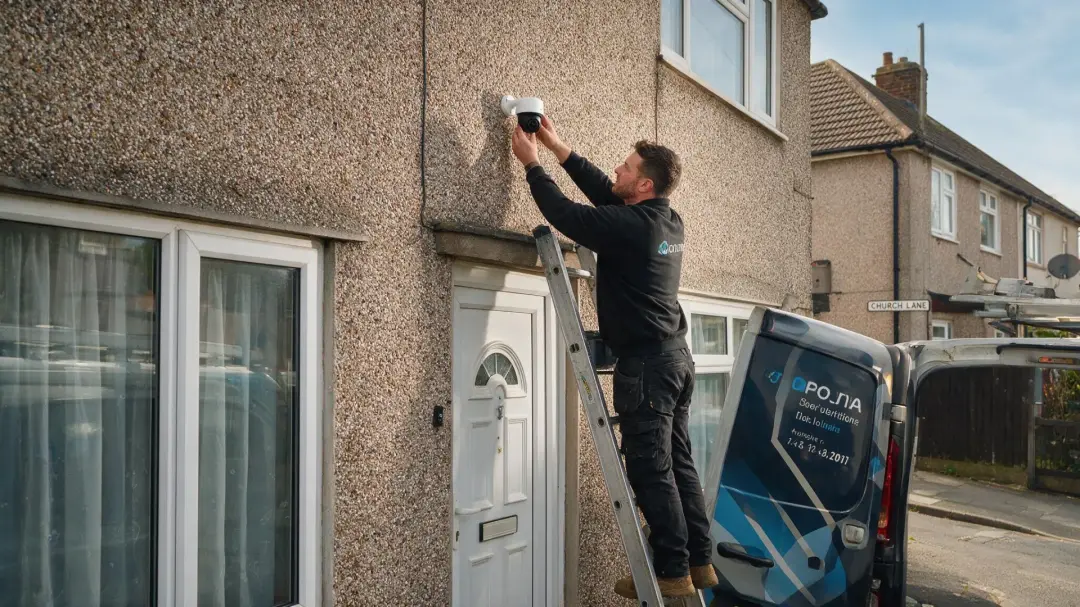
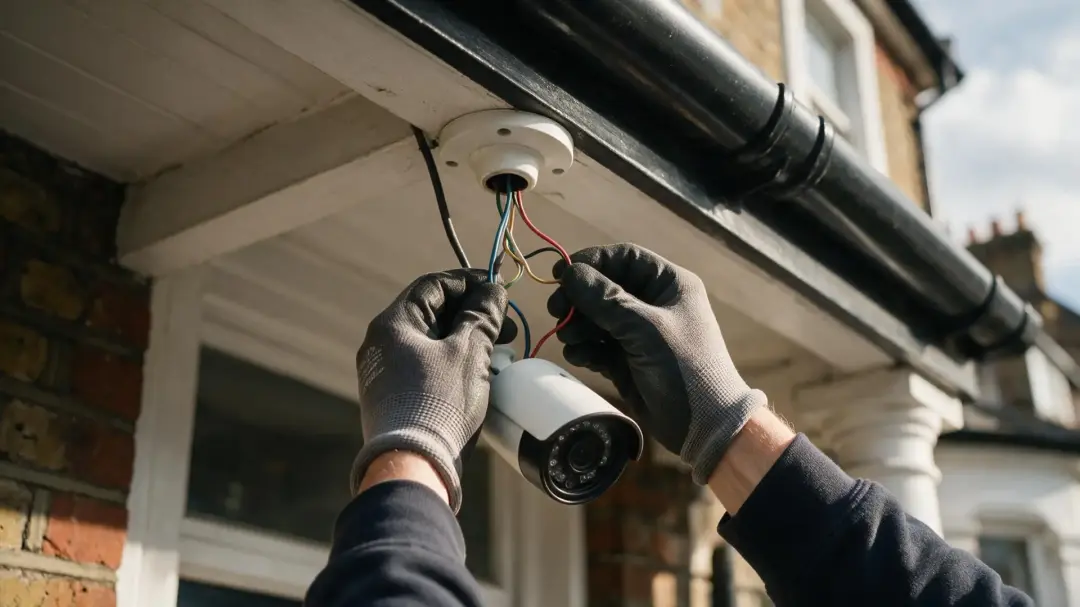
Professional installation can be useful when a property has several entrances, difficult blind spots or a large area to cover. An installer can assess where cameras are actually needed and may be able to achieve good coverage with fewer cameras through careful positioning.
Whatever installation method you choose, test every camera afterwards. Look at recordings from the day and night, check the important areas are visible and make sure plants, vehicles or other objects are not blocking the view. The system should also be reviewed as the property and surrounding garden change.
How Can You Work Out the Right Number of CCTV Cameras?
Begin with the main front and rear entrances, then add side access points, driveways, garages and valuable outdoor areas that cannot already be seen. Check each proposed camera for blind spots and remove unnecessary overlap. This gives you a camera number based on your actual property rather than a general figure.
For many homes, this may result in around two to four cameras. Larger detached properties can require four to six or more. The aim is not to install as many cameras as possible. It is to make sure every camera provides a useful view of an area that matters.
How Many CCTV Cameras Should You Choose?
The right number depends on your entrances, property shape, blind spots and the level of detail you need. A small home with straightforward front and rear access may only need two cameras. A larger property with side entrances, a driveway, garage and several outdoor areas could require four, six or more.
With 223,456 burglaries recorded by police in England and Wales in the year ending March 2026, security remains an important consideration even though recorded burglary fell by 9% from the previous year. A carefully planned CCTV system can provide useful coverage without adding cameras that serve no clear purpose.
If you are considering CCTV cameras focus on covering the areas that matter rather than simply installing the highest possible number. Secure doors, windows and a suitable alarm can work alongside well-positioned CCTV to give your property stronger protection.
For CCTV camera installation in Crawley, Redhill or Reigate, call our installers today.